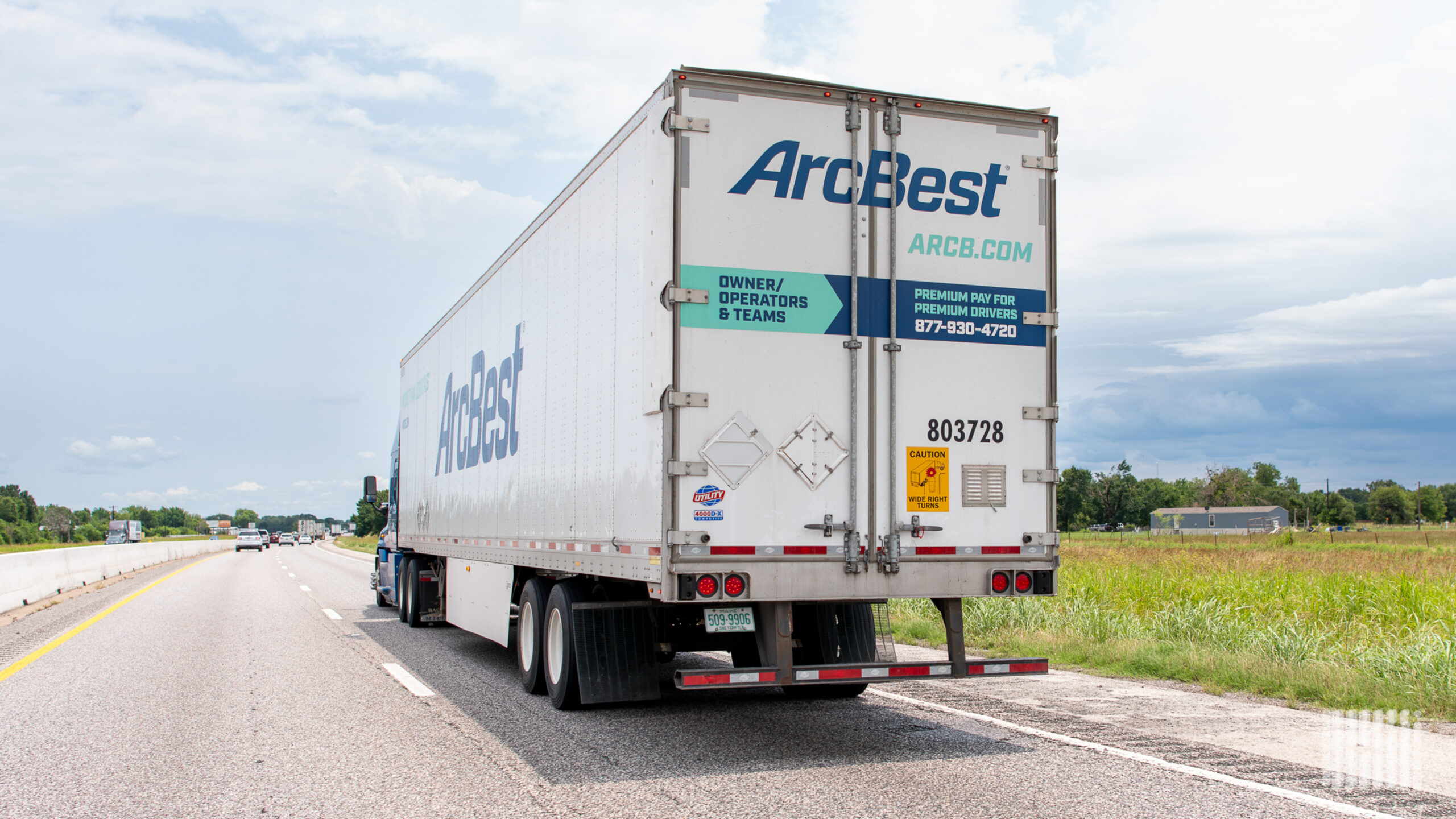
- Morgan Stanley has maintained an “Overweight” rating for ArcBest, raising its price target to $180.00, signaling strong confidence in the company’s future performance.
- ArcBest is benefiting from an improving freight market, disciplined pricing strategies, and increased Asset-Based tonnage, reflecting robust business activity.
- The company leverages AI for route optimization to achieve $15 million in annualized savings and has seen its Asset-Light segment return to positive operating income, driven by technological advancements.
ArcBest (NASDAQ:ARCB) is a logistics company with a market capitalization of approximately $3.11 billion. The company provides freight transportation and integrated logistics solutions. It operates in a competitive market, navigating factors like freight demand, pricing, and operational costs to maintain its financial health and market position.
On July 6, 2026, Morgan Stanley maintained its “Overweight” stock rating for ArcBest. This positive investment outlook suggests the firm believes the stock will perform better than the average return of other stocks in its sector. Morgan Stanley also raised its price target to $180.00 from $150.00, while the stock was trading at $139.67.
The positive outlook for ArcBest is supported by an improving freight market. ArcBest benefits from a tighter truckload cycle and disciplined pricing strategies. This is reflected in a 6.3% increase on first-quarter contract renewals and a rise in its Asset-Based tonnage per day, indicating stronger business activity and pricing power.
Technological advancements also contribute to ArcBest’s performance. ArcBest achieves $15 million in annualized savings through the use of AI for route optimization, which improves asset utilization. Furthermore, its Asset-Light segment has returned to positive non-GAAP operating income, helped by growth in shipments and higher productivity.
As highlighted by Zacks Investment Research, ArcBest stock trades at 0.7 times forward sales, which is a measure of its valuation relative to its expected revenue. While the company’s shares have surged 93.6% over the past year, potential market risks such as inflation and challenges in freight demand still require careful management.