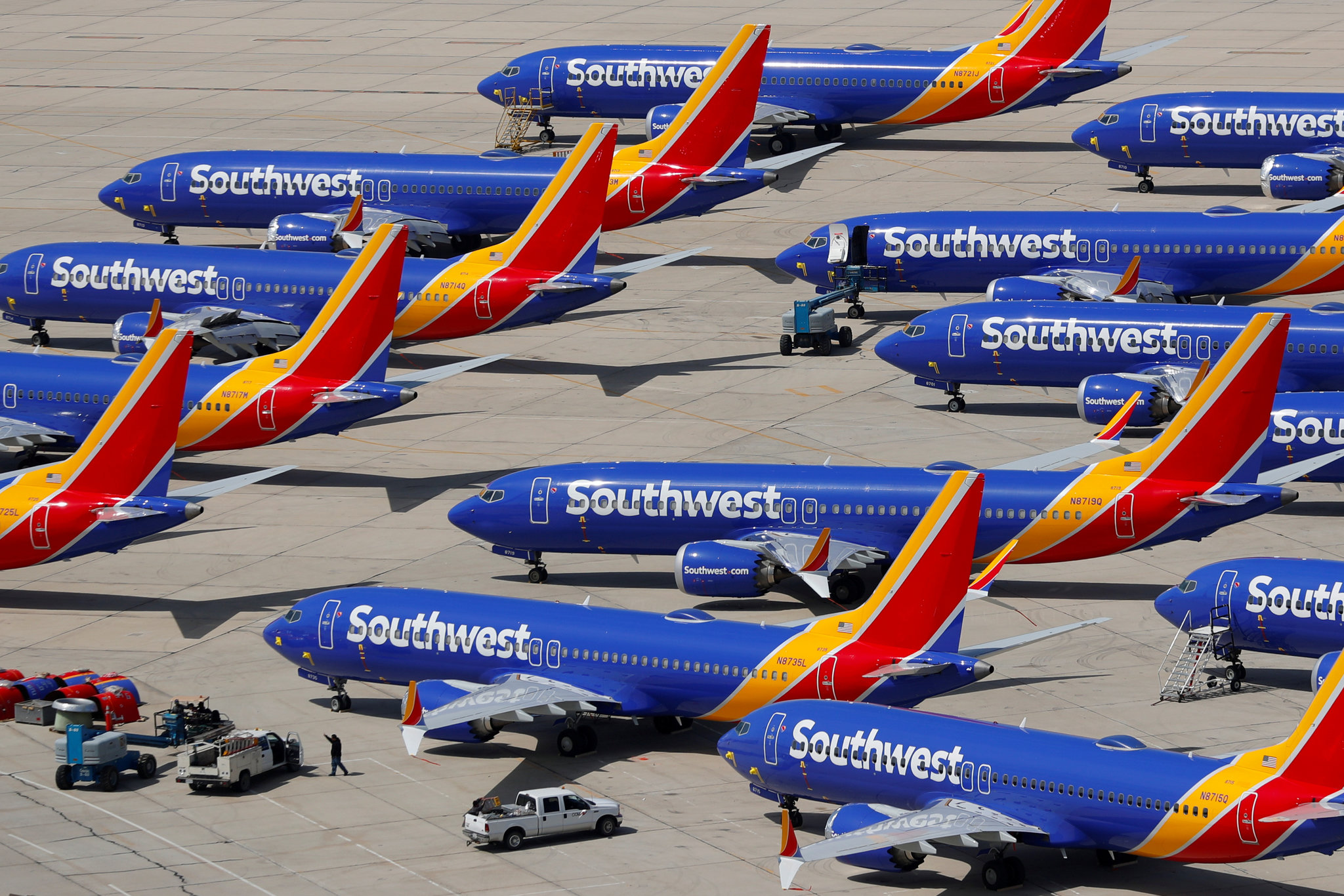
- Strong EPS Beat: Southwest Airlines reported an EPS of $0.94, significantly exceeding analyst estimates of $0.51.
- Revenue Shortfall Amidst Record Operating Revenues: Despite a quarterly revenue of $8.43 billion falling short of expectations, the airline achieved record operating revenues.
- Mixed Guidance: While the Q3 adjusted earnings forecast ($0.50 to $0.75) is cautious, the full-year outlook for adjusted earnings ($3.25 to $4.25) is stronger.
Southwest Airlines (NYSE: LUV), a major American airline known for its low-cost passenger service, recently announced its second-quarter financial results. Operating in the highly competitive airline industry, the company presented a mixed performance to investors, showcasing both positive and negative signals in its latest Q2 earnings report.
The airline reported a strong earnings per share (EPS) of $0.94, which significantly surpassed the analyst estimate of $0.51. This impressive result, a key indicator of company profitability, is supported by a more than 9% increase in its second-quarter profit from the previous year, highlighting robust financial performance.
In contrast, Southwest Airlines’ quarterly revenue of $8.43 billion fell slightly short of the expected $8.58 billion. Despite this miss, the company noted it achieved record operating revenues. This performance comes even as its fuel bill rose by almost $900 million, with higher fares helping to cover these costs, a common challenge in the airline industry challenges.
Looking ahead, Southwest Airlines’ guidance for the third quarter is cautious. Its adjusted earnings forecast of $0.50 to $0.75 per share is below analysts’ expectations of $0.82, as highlighted by CNBC. However, the company projects stronger full-year adjusted earnings, expecting a range between $3.25 and $4.25 per share, offering a mixed investor outlook.
The company’s financial health shows a Debt-to-Equity ratio of 0.44, indicating it uses less debt than equity to finance its assets. However, its current ratio of 0.49, which measures its ability to pay short-term debts, is below 1. This can suggest potential pressure on its short-term cash flow, an important consideration for stock market investors.