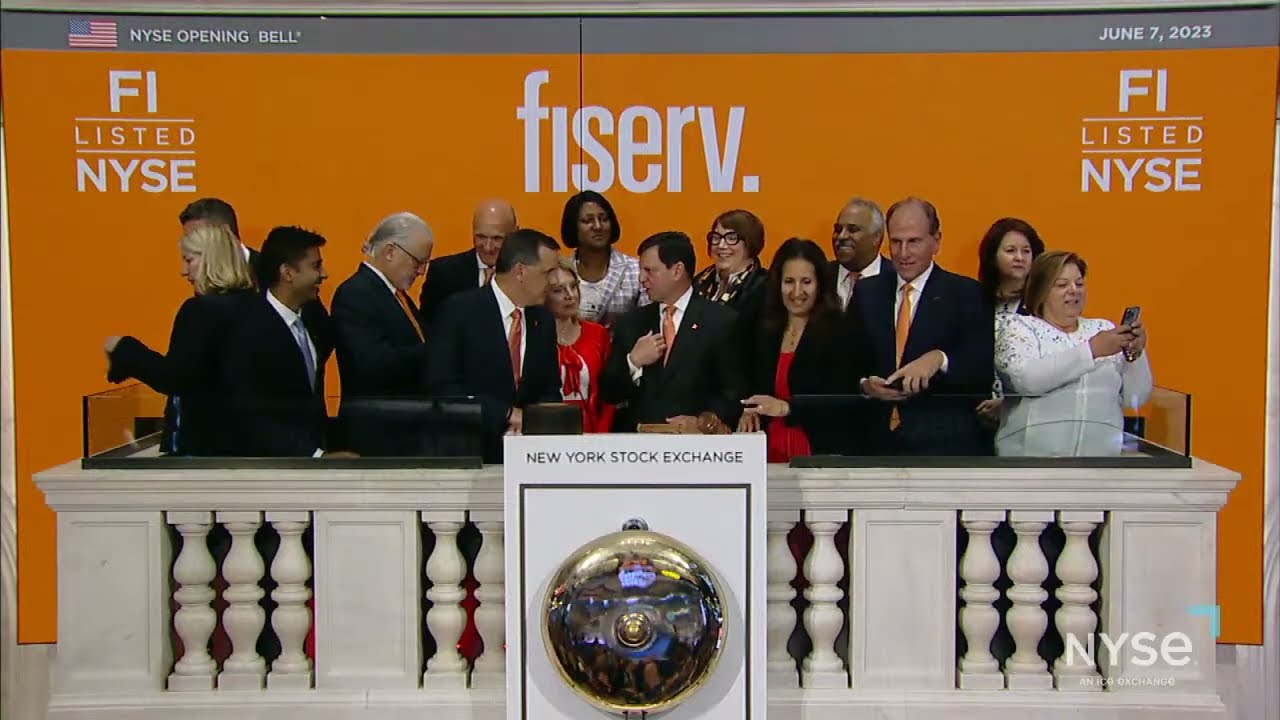
- An analyst from Cantor Fitzgerald set a price target of $53.00 for Fiserv, indicating a potential -16.93% downside from its previous stock price of $63.80.
- Fiserv reduced its 2026 guidance, expecting organic growth between negative one percent and flat, and a 14.2% cut in its 2026 earnings per share (EPS) projection to $7.41.
- The company’s stock is currently trading at 6.5 times its expected future earnings, significantly below its five-year average of 15.1 times, reflecting market skepticism despite generating $1.10 billion in free cash flow.
Fiserv (NYSE: FI) is a global financial technology leader, providing essential payment processing and financial services to banks, credit unions, and businesses. The company’s innovative fintech solutions help manage customer accounts, process digital payments, and support online banking, playing a key role in the flow of money and information within the financial ecosystem.
An analyst from Cantor Fitzgerald, Ramsey El-Assal, recently set a price target of $53.00 for Fiserv on August 31, 2026. At that time, the stock’s price was $63.80. This new target represents a potential downside of -16.93%, suggesting a cautious investment outlook and that the analyst believes the stock’s value may decrease.
This negative outlook reflects recent challenges faced by the company. As highlighted by Zacks Investment Research, Fiserv reduced its 2026 guidance after its second-quarter earnings report showed lower revenues and earnings. The company now expects its 2026 organic growth to be between negative one percent and flat, signaling potential headwinds for revenue growth.
The company’s profitability is also a significant concern. Its adjusted operating margin, a key profitability metric, dropped to 31.8% from 39.6% in the previous year. Following this, the 2026 earnings per share (EPS) projection was cut and is now expected to fall 14.2% to $7.41.
Due to these issues, the stock is trading at 6.5 times its expected future earnings, which is significantly below its five-year average of 15.1 times. As highlighted by Seeking Alpha, this suggests the market has priced in a decline for Fiserv, despite some bright spots like generating $1.10 billion in free cash flow.